Every driver with an older vehicle eventually faces the dreaded dilemma: the dashboard lights up, the engine makes an unfamiliar clanking noise, or the mechanic hands over a four-digit estimate for an unexpected failure. In that moment, a difficult financial decision must be made. Do you invest more money into an aging vehicle with low market value, or do you cut your losses, sell the car for scrap or trade-in value, and commit to a new monthly vehicle payment?
Deciding when to walk away from a used vehicle requires balancing emotional attachment against objective financial data. While routine maintenance like oil changes, brake pads, and tire swaps are a normal cost of driving, compounding mechanical breakdowns can quickly drain your savings. By learning how to distinguish essential safety repairs from non-critical issues and applying clear financial frameworks, you can make a smart, unemotional choice that protects your household budget.
Assessing Engine Condition and Primary Mechanical Costs
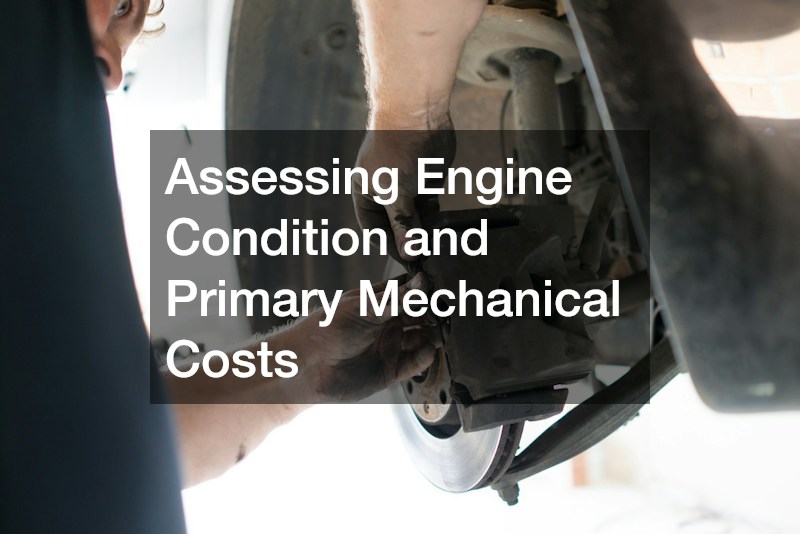
The engine is the heart of your vehicle, and major internal failures are often the single largest financial hurdle in used car ownership. When critical engine components fail, repair estimates can easily exceed the actual resale value of the car. However, catching minor component issues early can prevent total engine destruction and keep an older car running safely for years.
Key indicators that help determine if engine work is worth the investment include:
-
Diagnostic Precision: Understanding whether a problem is an isolated peripheral sensor failure or a structural internal failure like a blown head gasket or cracked block.
-
Maintenance History: Evaluating whether the engine has received regular oil changes and cooling system flushes throughout its service life.
-
Repair Mechanics: Assessing whether replacement components are readily available and affordable for your specific vehicle year and model.
Sourcing high-quality engine parts through certified suppliers ensures that major overhauls remain reliable and do not fail prematurely after installation. Establishing an ongoing relationship with a trusted local auto mechanic provides you with honest diagnostic advice regarding your engine’s true remaining lifespan before you commit to expensive repairs.
Balancing Suspension Health and Wheel Alignment Dynamics
A vehicle’s steering and suspension systems are essential for driver safety, handling stability, and tire longevity. As a car ages, rubber bushings degrade, ball joints wear down, and shock absorbers lose their dampening ability. Ignoring suspension wear not only creates an uncomfortable, noisy ride but also compromises your vehicle’s ability to stop quickly or steer safely during sudden emergencies.
Common signs that your vehicle’s handling dynamics require immediate professional attention include:
-
Irregular Tire Wear: Tread wearing down rapidly on the inner or outer edges of tires due to misaligned suspension geometry.
-
Vehicle Pulling: The car drifting or pulling strongly to one side while driving on a straight, level road surface.
-
Knocking or Clunking Noises: Loud metallic sounds occurring when driving over speed bumps, potholes, or uneven pavement.
Visiting specialized alignment shops after replacing worn struts, tie rods, or control arms ensures your steering angles are set back to factory specifications, preserving your tires and restoring handling safety. Relying on established local auto repair services for comprehensive multi-point safety audits helps you catch worn suspension components before they snap and cause secondary damage to your drivetrain.
Repairing Glass Damage and Maintaining Cabin Visibility
Clear visibility is fundamental to safe driving, yet windshield chips and stress cracks are among the most common forms of damage on older vehicles. Beyond simply providing a view of the road, modern windshields are a structural component of the vehicle cabin, supporting the roof strength during a rollover accident and providing backstop support for passenger airbag deployment.
Key reasons to address auto glass damage promptly include:
-
Preventing Crack Spread: Temperature fluctuations and road vibrations quickly cause small rock chips to spiderweb across the entire glass surface.
-
Passing Inspections: Ensuring the driver’s line of sight remains clear of severe cracks to comply with state vehicle safety standards.
-
Preserving Structural Safety: Maintaining the structural integrity of the roof and safety restraint systems in the event of a collision.
Scheduling a prompt auto glass repair for minor rock chips can seal the damage inexpensively before a full glass replacement becomes necessary. Taking action early keeps overall vehicle maintenance costs low while keeping your view of the road completely clear and safe.
Managing Body Repairs, Frame Damage, and Surface Rust
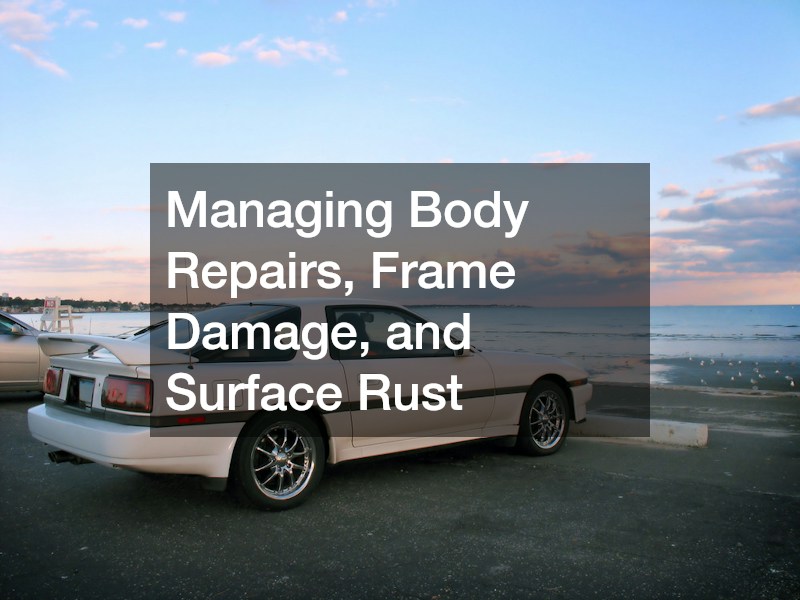
Exterior cosmetic damage often seems like a minor concern on an older vehicle, but unaddressed body damage can quickly turn into severe structural corrosion. Once moisture, road salt, and dirt penetrate through bare metal, rust spreads rapidly across rocker panels, wheel wells, and core frame rails, compromising the safety envelope of the vehicle.
Critical factors to evaluate when dealing with exterior body and frame issues include:
-
Structural vs. Cosmetic Damage: Differentiating between minor surface dents and structural frame bends that compromise crash safety.
-
Corrosion Extent: Identifying whether rust is isolated to removable body panels or penetrating deep into load-bearing frame components.
-
Paint Protection: Sealing exposed metal promptly after scratches or minor impacts occur to prevent environmental oxidation.
Seeking professional guidance for local auto collision repairs allows technicians to evaluate whether a vehicle frame can be safely straightened after an accident. Applying a high-quality auto painting service over repaired body panels seals the exposed metal, prevents destructive rust from spreading, and maintains the vehicle’s overall resale value.
Addressing Exhaust Flow, Noise, and Emissions Failures
An aging exhaust system creates severe noise pollution, decreases engine performance, and lowers fuel efficiency. More importantly, leaks in the exhaust manifold or undercar piping can allow toxic carbon monoxide gas to enter the passenger cabin, creating an immediate health hazard for occupants.
Common symptoms of exhaust system degradation include:
-
Loud Engine Roar: Excessive exhaust noise during acceleration caused by holes, rusted pipe joints, or cracked mufflers.
-
Rattling Underneath: Loose heat shields or broken internal baffles inside catalytic converters and muffler chambers.
-
Failed Emissions Tests: Illumination of the check engine light due to catalytic converter inefficiency or leaking exhaust oxygen sensors.
Working with a skilled car muffler repair service allows you to patch small exhaust pipe leaks, re-weld broken hanging brackets, and fix minor corrosion spots affordably. When severe rust destroys pipe sections completely, securing quality local muffler replacements restores quiet engine operation, protects interior air quality, and ensures your vehicle passes required municipal emissions inspections.
Servicing Door Latch Mechanisms and Window Controls
Vehicle doors contain complex mechanical and electrical assemblies, including power window regulators, door latch linkages, lock actuators, and weatherstripping seals. When these components fail, they create frustrating daily inconveniences, security vulnerabilities, and potential safety risks during emergency evacuations.
Key functional checks for door and cabin enclosures include:
-
Latch Reliability: Confirming that all doors latch securely, lock properly, and open smoothly from both interior and exterior handles.
-
Window Operation: Ensuring power window glass rolls up completely to seal out rain, wind noise, and unauthorized access.
-
Weatherstrip Seals: Inspecting rubber door seals to prevent water from pooling in floorboards and causing hidden interior rust.
Investing in targeted car door repair solves broken door handles, failing window motors, and sticking lock mechanisms efficiently. Keeping your doors and windows fully operational preserves basic convenience, keeps your vehicle secure from theft, and maintains weather-tight interior comfort.
Evaluating the Cost of Ownership vs. Monthly Payments

When deciding whether to keep or sell an older used car, the central financial calculation comes down to comparing your current repair expenses against the cost of acquiring a replacement vehicle. Many drivers hesitate at a $1,500 repair bill, forgetting that buying a newer car involves monthly financing payments, higher insurance premiums, and increased registration fees.
To put repair costs into clear financial perspective, consider the following points:
-
The Monthly Comparison: A single $1,200 repair bill equals just two or three monthly payments on a typical newer used car loan. If that $1,200 fix keeps your current car running reliably for another year, you save thousands of dollars overall.
-
Insurance and Tax Savings: Older vehicles cost significantly less to insure and register each year compared to newer models, offsetting occasional maintenance costs.
-
Depreciation Curve: Older cars have already experienced the bulk of their depreciation curve, meaning their market value drops slowly compared to a brand-new vehicle.
If your total annual repair costs remain lower than what you would pay in financing and higher insurance on a replacement vehicle, fixing your current car remains the financially superior choice.
Applying the 50 Percent Rule to Major Repairs
While ongoing minor maintenance is expected, there comes a point where a single repair estimate signals that a vehicle has reached the end of its economic life. Financial experts and automotive technicians often rely on the “50 Percent Rule” as a clear guideline for making this decision.
The 50 Percent Rule operates on three core principles:
-
Market Value Threshold: If a single repair estimate exceeds 50 percent of the car’s current private-party market value, the repair is rarely financially justified.
-
Compounding Failures: A high-cost repair on an aging car does not automatically increase the car’s market value by the same amount; a $2,000 car with a $2,000 new transmission is still generally worth only around $2,000 to $2,500.
-
Secondary Failure Risks: High-cost repairs on high-mileage vehicles are often followed quickly by other major system failures, such as cooling system leaks or alternator failures.
If a repair estimate breaches the 50 percent threshold, it is usually wiser to put those funds toward a down payment on a more reliable replacement vehicle.
Identifying Unusable Red Flags and Safety Exit Points
Beyond financial calculations, certain severe mechanical and structural issues make an older car inherently unsafe or impractical to keep driving regardless of cost. Recognizing these critical red flags helps you prioritize personal safety over financial hesitation, preventing tragic highway accidents or catastrophic breakdowns in heavy traffic. Continuing to operate a vehicle with compromised safety systems poses unacceptable risks to you, your passengers, and fellow motorists on the road.
Clear indicators that it is time to stop driving and retire a vehicle include:
-
Severe Frame Rust: Deep structural rust that weakens subframe mounts, suspension attachment points, or floor pans cannot be repaired safely or affordably, risking structural collapse during a collision or sudden hard braking.
-
Intermittent Electrical Failures: Complex, short-circuiting electrical harnesses that cause random engine stalls at highway speeds, disable safety airbags, or shut off exterior headlights unexpectedly during night driving.
-
Multiple Simultaneous Failures: High-mileage vehicles requiring simultaneous engine, transmission, and suspension overhauls where compounding mechanical degradation compromises overall vehicle stability and driveability.
-
Failed Cabin Integrity: Warped door frames, non-functional restraint systems, or compromised roof pillars that destroy the vehicle’s protective crash cage geometry.
When a vehicle suffers from fundamental safety flaws or systemic mechanical failure, continuing to drive it places you and others at grave risk. Recognizing these terminal issues allows you to transition out of the vehicle safely, responsibly, and with complete peace of mind.
Establishing a Practical Used Car Maintenance Fund
The best way to eliminate stress around used car repairs is to establish a dedicated, proactive vehicle emergency fund. Rather than being surprised by a sudden mechanical issue, setting aside a small amount each month creates a financial cushion that makes necessary repairs manageable.
Effective strategy for managing a car repair budget:
-
Monthly Savings Target: Transfer $50 to $150 per month into a dedicated vehicle maintenance account, depending on your car’s age and mileage.
-
Proactive Inspections: Have a qualified mechanic perform seasonal multi-point inspections to catch wearing belts, hoses, and brake pads before they break.
-
Strict Utilization Rules: Reserve this fund strictly for necessary mechanical, safety, and operational repairs rather than optional cosmetic accessories.
Having a dedicated repair fund ready allows you to fix critical issues promptly, keeping your car safe and reliable on the road while avoiding high-interest credit card debt or emergency loans.
Navigating the financial realities of used car ownership requires combining objective repair estimates, accurate vehicle valuations, and clear safety standards. By maintaining primary mechanical systems, fixing glass and body damage early, and applying practical rules like the 50 Percent Rule, you can extend your vehicle’s lifespan confidently. When repairs finally exceed the value and safety of the car, having a financial plan in place ensures you can walk away smoothly and move into a safe, reliable replacement vehicle.