Experiencing a vehicle collision is one of the most stressful events a driver can face. In an instant, you are forced to deal with safety concerns, insurance paperwork, rental vehicles, and the sudden loss of reliable transportation. Conversely, embarking on a custom build, whether that involves a complete color change, custom bodywork, or performance modifications, is an exciting journey driven by passion and personal style.
Despite coming from opposite ends of the automotive spectrum, both scenarios bring you to the exact same crossroads: finding a shop capable of handling your vehicle with precision, care, and technical expertise. Choosing the right facility is rarely as simple as performing a quick online search and picking the closest location. The automotive repair industry is vast, ranging from high-volume insurance factory operations to small, bespoke fabrication garages. Selecting the wrong shop can result in mismatched paint, compromised structural safety, persistent mechanical issues, and endless delays. This comprehensive guide breaks down everything you need to know to evaluate collision centers and custom modification facilities, helping you protect your safety, your vehicle’s value, and your wallet.
Collision vs. Custom Work: Understanding Shop Specializations
Before you begin calling local shops, it is vital to understand that collision repair and custom modification work require fundamentally different mindsets, skill sets, and equipment. While both involve vehicle bodies and paint booths, their daily operations are vastly different.
Collision centers focus primarily on restoration. Their ultimate goal is to return a damaged vehicle back to its exact pre-accident condition, adhering strictly to Original Equipment Manufacturer standards and structural guidelines. Driven heavily by the requirements of major auto insurance agencies, standardized labor rates, and quick turnarounds, these facilities specialize in structural frame straightening, computerized panel alignment, safety sensor recalibrations, and exact factory paint matching. Their primary directive is restoring structural safety and returning the vehicle to the road as quickly and safely as possible.
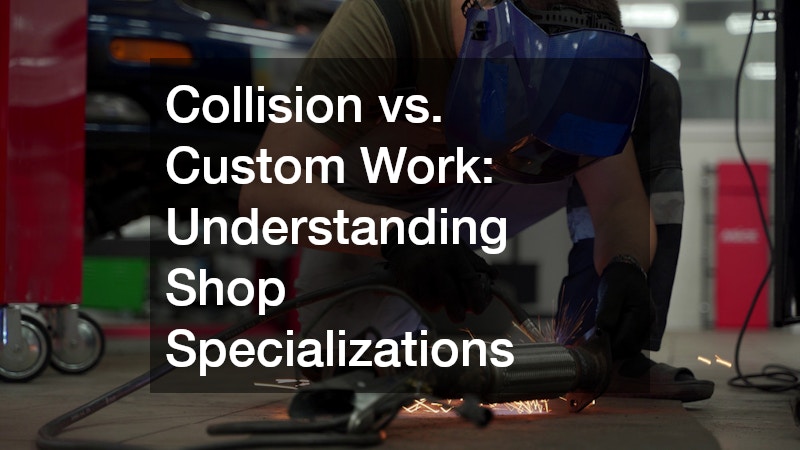
Custom shops, on the other hand, focus on transformation. Rather than restoring a car to factory defaults, custom technicians modify, fabricate, or completely overhaul a vehicle to meet a specific aesthetic or functional vision. These operations are driven by client collaboration, artistry, patience, and bespoke craftsmanship. Core skills in a custom garage include sheet metal fabrication, fiberglass or carbon fiber molding, specialized paint mixing like candies and metallic flakes, and custom body kit fitting. Their key objective centers around creating a unique, personalized vehicle where visual appeal and individual preference take center stage.
Research & Vetting: What to Look for Before Making First Contact
Finding a trustworthy facility requires digging past surface-level marketing and analyzing the core qualifications of the facility and its staff. Never hesitate to ask about the ongoing training credentials of the technicians who will actually be working on your vehicle. Modern automobiles are complex structures built from high-strength steels, aluminum alloys, carbon fiber, and integrated electronics. Proper repair requires continuous education.
Look for shops holding an I-CAR Gold Class designation, which represents the gold standard for collision repair training. Facilities with this credential dedicate significant time each year to training technicians on the latest structural repair techniques, welding standards, and safety protocols. Additionally, certifications from the National Institute for Automotive Service Excellence ensure technicians are qualified in specific areas like refinishing and structural analysis, while manufacturer-specific certifications prove a shop has invested in factory-mandated tools to repair specific vehicle brands.
While online star ratings provide a quick snapshot, reading the detailed narrative inside customer reviews tells the real story. Look for consistent patterns rather than isolated complaints. Prioritize reviews that include high-resolution photos of finished work, paying close attention to paint reflection and panel gap consistency. Pay close attention to how past customers describe the shop’s communication habits, noting whether the team provided regular updates or if customers had to hunt down information. It is also wise to observe how the shop responds to negative feedback online, as a professional, solution-oriented response to an unhappy customer shows strong accountability and customer service.
When evaluating a facility, assess whether their infrastructure can handle all aspects of your vehicle’s condition. A major collision rarely affects only the exterior sheet metal; mechanical components, suspension systems, and cooling radiators are often damaged in the same impact. Choosing a facility capable of handling comprehensive mechanical auto repair alongside structural panel straightening eliminates the risk and hassle of having your car towed between multiple locations. Furthermore, if your vehicle setup includes heavy-duty hauling equipment or utility rigs, verify whether the shop has the physical bay space, heavy lifts, and frame equipment necessary to accommodate specialized setups like commercial rigs or trailer repairs without compromising safety or workflow.
Inspecting the Shop & Understanding Modern Diagnostic Workflows
Once you have narrowed down a list of potential shops, plan an in-person visit. An initial walkthrough gives you invaluable insight into how the business is run behind closed doors. A quick look at the shop floor often reflects the quality of work produced. While metal bodywork and sanding generate dust, a professional shop maintains clean, organized work bays. Tools should be stored properly, and parts removed from vehicles should be labeled and placed on dedicated carts rather than piled inside customer interiors.
Proper bodywork and paint preparation also require intense, high-output lighting, as a dark, cluttered work area makes it easy for technicians to miss minor panel distortions, sand scratches, or paint imperfections. Always inquire about their paint booth technology, as high-end, downdraft paint booths with heated bake cycles are essential for curing paint evenly and preventing airborne dust particles from settling into fresh clear coats.
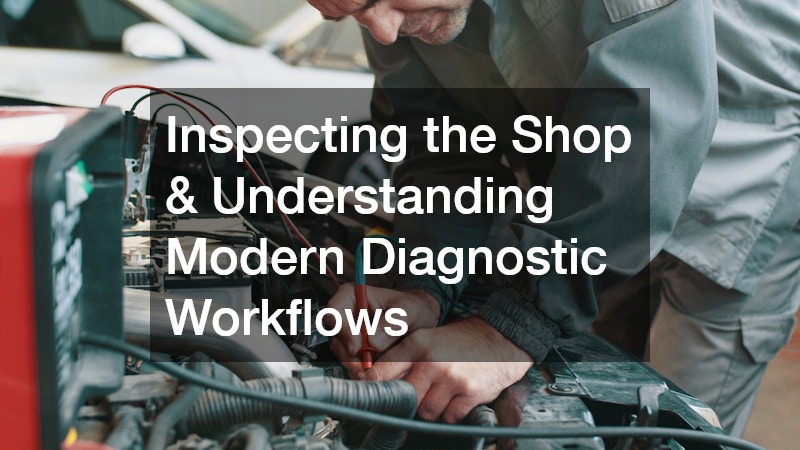
Top-tier repair facilities have moved far beyond handwritten estimates and clipboards, utilizing advanced repair shop software to manage every step of the repair process. This technology allows service advisers to create precise, line-item digital estimates, order exact factory components directly from suppliers, and track a vehicle’s progress through each stage of production. For the vehicle owner, facilities utilizing robust management systems can send automated updates complete with in-progress photos, ensuring you stay fully informed without needing to call for status reports.
A well-managed facility also takes pride in its environmental stewardship and waste management protocols. Automotive bodywork generates a substantial amount of scrap material, ranging from damaged steel quarter panels to crushed aluminum hoods. Responsible facilities maintain dedicated, organized metal recycling programs to divert reusable metals away from landfills and ensure raw materials are processed efficiently. Seeing clean scrap sorting stations and organized hazardous waste collection areas is a strong indicator of an orderly, legally compliant, and modern business.
Navigating Insurance, Estimates, and Out-of-Pocket Expenses
The financial side of vehicle repair, especially when dealing with insurance claims, can feel overwhelming. Understanding your legal rights and learning how to read detailed line-item estimates puts you firmly back in control. After an accident, your insurance company may strongly suggest that you take your vehicle to one of their preferred or direct repair program shops. While these shops offer convenience and streamlined claims handling, it is essential to remember that you have the legal right to choose whichever repair facility you want.
Insurance companies prefer preferred shops because they have pre-negotiated labor rates and discount agreements in place. However, some of these facilities face pressure to cut corners, use cheaper aftermarket parts, or rush repairs to keep costs low for the insurer. An independent shop works directly for you, prioritizing your safety and complete vehicle restoration over an insurance company’s bottom line.
Never accept an estimate that simply lists a single total price for repairs and paint. Demand a detailed, itemized breakdown and review the parts classifications carefully. The estimate should clearly state whether the shop is using brand-new original equipment parts made by your car’s manufacturer, third-party aftermarket parts, or salvaged used components—which is especially critical to evaluate if an insurer offers to buy my car outright as a total loss rather than fund a proper repair. The estimate must also separate labor into specific categories, such as sheet metal bodywork, frame alignment, mechanical labor, and paint application. Paint, clear coat, primer, seam sealers, and sanding supplies should also be clearly accounted for as dedicated line items.
Evaluating Custom Capabilities: Paint, Wraps, and Aftermarket Enhancements
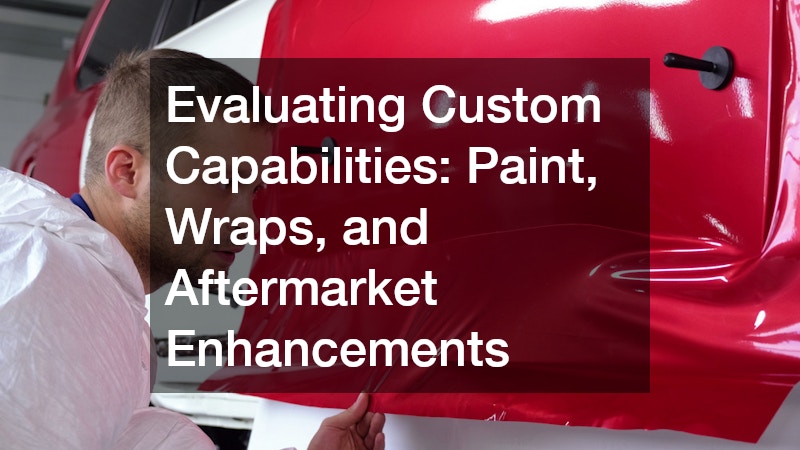
If you are taking your vehicle to a facility for custom alterations rather than collision repair, evaluation criteria shift dramatically toward artistry, precision, and specialized material application. Achieving a flawless paint finish requires a master painter’s touch. When inspecting a shop’s previous custom paint builds or spot repairs, view the car under both natural sunlight and artificial light to ensure the paint on a repaired panel blends seamlessly into adjacent panels without visible shade shifts or metallic flake misalignment.
A quality repair should also match the surrounding factory texture, while a high-end custom job should be wet-sanded and buffed to a razor-sharp, mirror-like reflection. Be sure to open doors, hoods, and trunks to check for tape lines or dry, rough clear coat edges along jambs and rubber seals.
Not all custom visual transformations require permanent paint modifications, as many enthusiasts opt for high-grade vinyl wraps, clear paint protection films, or specialized accents. If you are seeking a unique aesthetic upgrade, verify whether the facility employs experienced installers who can design, cut, and apply a high-grade vinyl accent or custom car graphic without damaging the underlying paint layer or leaving bubbling along body contours.
Custom modification often extends beyond aesthetics into raw utility. Whether you are building an off-road rig, a work truck, or a street machine, proper installation of aftermarket components is vital. Ensure the shop has proven experience fitting structural modifications, such as heavy-duty winch bumpers, custom utility racks, wider fender flares, or a specialized truck accessory, without compromising vehicle wiring harnesses, parking sensors, or factory mounting points.
Post-Collision Engine & Mechanical System Checks
A severe vehicle impact rarely stops at exterior cosmetic damage. The kinetic energy from a collision transfers through the bumper, subframe, and engine bay, often causing hidden mechanical stress and electronic faults that must be addressed alongside body panel replacement. Modern vehicles feature unibody construction designed to crumple predictably during an impact, absorbing energy to protect cabin occupants. When a unibody or traditional body-on-frame vehicle suffers structural damage, it must be pulled back into factory tolerance using a specialized frame machine equipped with three-dimensional laser measuring technology.
Target sensors attached to reference points beneath the vehicle allow the computerized system to compare distorted metrics against factory dimensions, guiding hydraulic rams to pull the metal back within millimeter-precise tolerances. Following structural pulling, a four-wheel alignment must be performed to ensure suspension geometry is correct and the vehicle tracks straight without abnormal tire wear.
Impact forces can easily puncture radiators, crack intake manifolds, bend steering racks, or fracture engine mounts. Ensure your chosen repair facility conducts thorough mechanical evaluations under the hood. A complete repair plan must address underlying cooling leaks, sensor failures, and structural engine stress, ensuring that necessary car engine repair tasks are fully completed before the vehicle undergoes final paint work and road testing.
Guarantees, Warranties, and Final Delivery Inspection
The repair process is not complete when the paint dries. A reputable facility stands behind its workmanship with a written warranty and encourages a thorough, transparent final inspection before you drive off the lot. Before authorizing work, ask the shop for a written copy of their warranty policy to understand what is covered, for how long, and who honors the guarantee. Reputable shops typically offer a limited lifetime warranty on structural frame repairs, sheet metal bodywork, and labor for as long as you own the vehicle. Quality paint warranties cover issues like peeling, cracking, haze, or premature fading, while replacement parts are covered by the manufacturer’s warranty terms.
When you arrive at the shop to pick up your finished vehicle, do not rush through the sign-off process. Perform a methodical walkthrough in bright, direct sunlight. Examine the paint color match from multiple angles, ensuring the color and metallic flake match adjacent panels perfectly. Run your hand gently over the fresh paint to ensure it feels completely smooth and free of sand scratches, dirt nibs, or heavy texture. Inspect rubber window seals, plastic trim, wheel wells, and glass for dry paint overspray or masking tape lines, and check the gaps between doors, fenders, hood, and trunk to ensure they are uniform and straight from top to bottom.
Choosing the right auto body shop comes down to research, clear communication, and an uncompromising commitment to quality. Whether you are navigating the aftermath of a highway collision or bringing a long-held custom design vision to life, taking the time to evaluate technician certifications, inspect facility cleanliness, demand detailed line-item estimates, and perform a rigorous final delivery inspection guarantees that your vehicle receives the care it deserves.
By approaching the selection process systematically, you protect your financial investment, maintain your vehicle’s long-term resale value, and, most importantly, ensure that you and your passengers hit the road in a vehicle that is structurally sound, visually flawless, and safe to drive.